 TM
TM(Advertisement)
Tube City Community Media Inc. is seeking freelance writers to help cover city council, news and feature stories in McKeesport, Duquesne, White Oak and the neighboring communities. High school and college students seeking work experience are encouraged to apply; we are willing to work with students who need credit toward class assignments. Please send cover letter, resume, two writing samples and the name of a reference (an employer, supervisor, teacher, etc. -- not a relative) to tubecitytiger@gmail.com.
Ads start at $1 per day, minimum seven days.
Report: Mon Valley Works Lags Behind World
Analyst says steel industry needs investment in new tech to remain competitive
By Danielle M. Smith - Public News Service
The Tube City Almanac
December 16, 2025
Posted in: State & Region
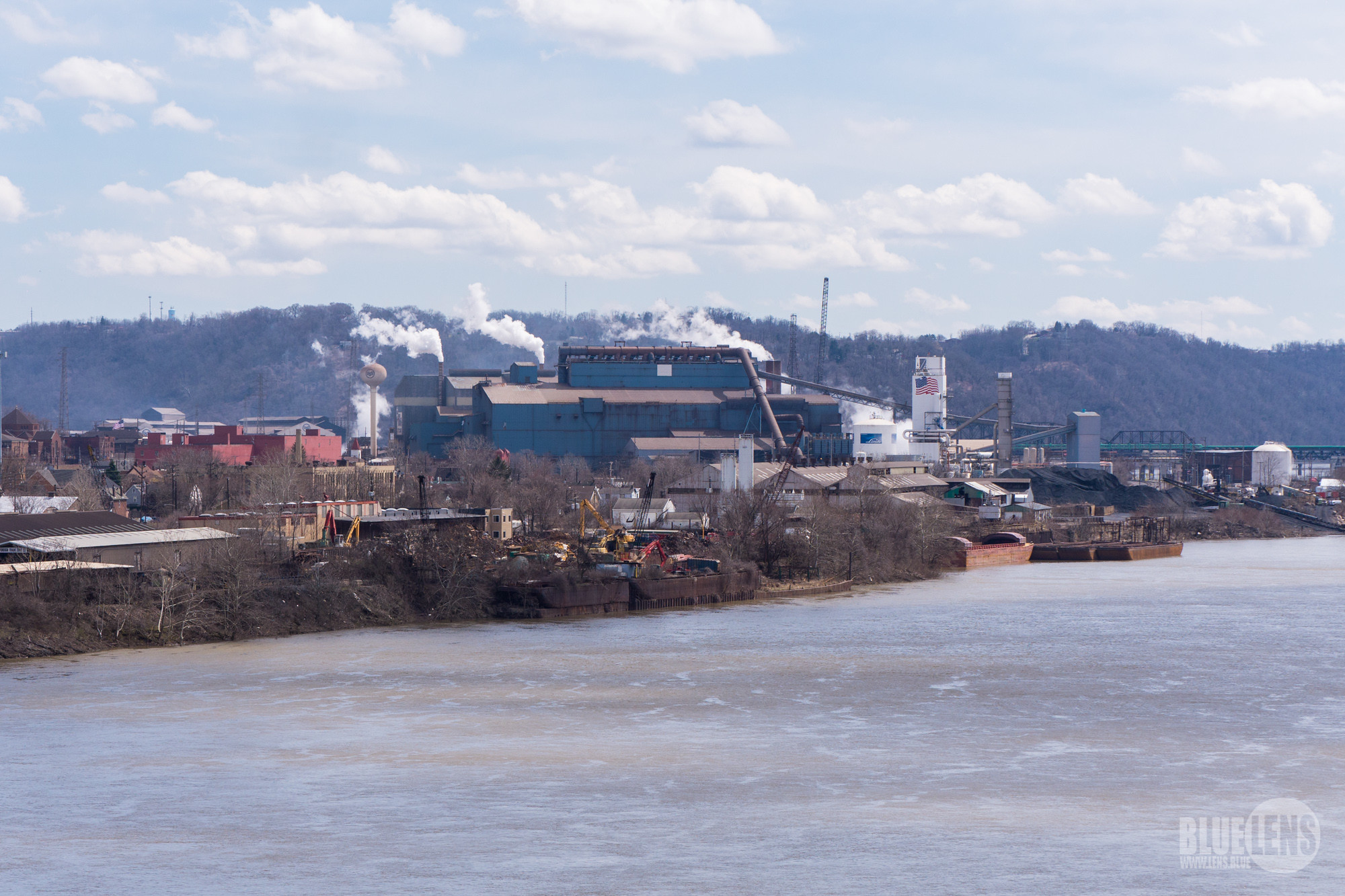
U.S. Steel’s Edgar Thomson Plant was founded by Andrew Carnegie in 1873 and forms the nucleus of what is now called the Mon Valley Works. (Mark Dixon photo via Flickr, licensed under Creative Commons)
According to a new analysis, the U.S. steel industry is falling behind as the global market shifts toward cleaner production.
Nippon Steel’s acquisition of U.S. Steel could help reverse it, with $6.5 billion planned for upgrades at Pennsylvania’s Mon Valley Works, Indiana’s Gary Works, and a new mill, potentially creating jobs and cutting emissions.
Justine Hackimer, industrial decarbonization program manager at the Ohio River Valley Institute, said the report updates their 2023 findings, showing without investment in clean steel, the Mon Valley’s legacy operations could fall further behind, but a shift to green steel — made in electric furnaces, not coke- or gas-fired blast furnaces — could boost the region’s economy.
The Mon Valley Works includes Clairton Plant — a cokemaking faciility — as well as Irvin Plant in West Mifflin and Edgar Thomson Plant in Braddock and North Braddock, the region’s last integrated steelmaking facility.
“Prior research done by the Ohio River Valley Institute did show that you could grow jobs supported by steel making in the region by 27 to 43 percent,” Hackimer said. “That would be because you have to build out renewables to serve that but it also attracts more downstream industries around this new supply of green steel.”
Hackimer said that Nippon has promised to invest nearly $11 billion in its U.S. Steel operations over three years. But for the Mon Valley, the big question is whether this will drive a real modernization or just keep things running as usual.
So far, announced projects such as a slag recycler and a new rolling mill do not suggest a major shift yet, she said.
Hackimer pointed out that Nippon Steel and U.S. Steel are investing in cleaner steelmaking — just not in Western Pennsylvania. The companies plan to build a direct reduced-iron plant in Arkansas.
“Investments in this kind of cleaner technology are happening, but they're not happening in the Mon Valley,” Hackimer said. “They’re not happening in Gary (Indiana). They’re not happening in some of these communities that really have been suffering from pollution and lack of investment.”
The report showed U.S. steel has fallen behind China and other Asian producers, which accounted for about 70 percent of global raw steel production in 2024. As China signals a move toward large-scale decarbonization, other regions may follow.
China and other countries increasingly produce steel in electric furnaces, not coke or natural-gas fired furnaces.
Hackimer said pressure from China has already led to decades of U.S. blast furnace closures, with Chinese steel filling the gap, and now China itself is moving away from blast furnaces.
“We’re kind of at risk of that happening again with the green steel that they’re making,” Hackimer said. “If China is growing this market and the U.S. is not, then you’re facing more pressures from China too. And so it is really signaling that it sees green steel just isn’t an environmental luxury, that it is a valuable commodity.”
She said there is a major concern for the Mon Valley and union steelworkers: If investments are not aligned with where the industry is headed, the plants could become stranded assets and be left behind.
Even with new money coming in, Hackimer said, a global shift toward cleaner steelmaking is underway in Europe and China, making it critical for Mon Valley communities to be asking what their long-term future looks like.
Originally published December 16, 2025.
In other news:
"Fire Chief Bids Farew…" ||